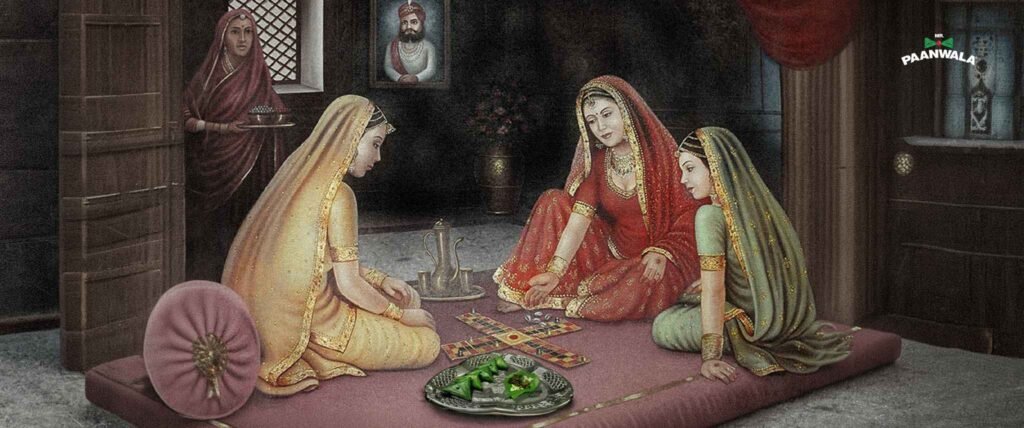
There have been numerous instances in South Asian society where Paan has been used, but the role of Paan in royalty has been particularly significant. It is no longer just an act of preparing the betel leaf. It has been a tradition associated with social meetings and greetings.
In Mughal times, paan was linked with hospitality and court etiquette. Paan consisted of betel leaves that had been filled with things like the areca nut, perfumed spices, or anything else as per choice and regional traditions. Serving paan to a guest could send a message of respect.
Etiquette of the court included great importance of presentation as well. It could be made distinct as a social custom through skillful folding of the leaves and proper containers.
The Nawabi culture, especially in historic places like Lucknow, gained fame because of its elaborate practices when it came to eating and offering hospitality. Paan formed part of these traditions where emphasis was placed on taste, presentation, and manner of service.
In terms of paan etiquette, various practices were reflective of the culture of being polite in social settings. This is evident in the practice where paan was offered at the end of meals or social visits as a token of hospitality.
The cuisine of India incorporates numerous spices and aromatic ingredients which form the traditional cooking practice in India. According to Statista, India is expected to produce around 12.5 million metric tons of spices in FY 2024-25. This may not account for paan but helps to demonstrate the scale of the spice industry in the country.
At present, the practice of decorating the food remains a part of the luxury dining experience. Paan catering services in New Jersey help to incorporate this practice during weddings, cultural events, or even for a personal celebration. Personalized counters with newly prepared varieties of paan will allow the guests to familiarize themselves with the tradition of paan.
The future of paan will be associated with the preservation of traditional recipes and adaptation of its presentation according to current standards.
Contemporary menus for paan might include not only the traditional meetha paan but also new flavors and modernized versions of it. The future of paan is linked to a balance between innovation and cultural authenticity, as well as informed choices concerning ingredients like the areca nut.
For parties and corporate events, there are paan catering services in New Jersey that can bring paan into one’s life in a unique way. The future of paan also lies in passing its rich history down to future generations.
Looking for assistance with your wedding or cultural function? Get in touch with Mr.Paanwala for special paan menus and paan catering at your disposal.

 Designed by Rang Digitech LLC