
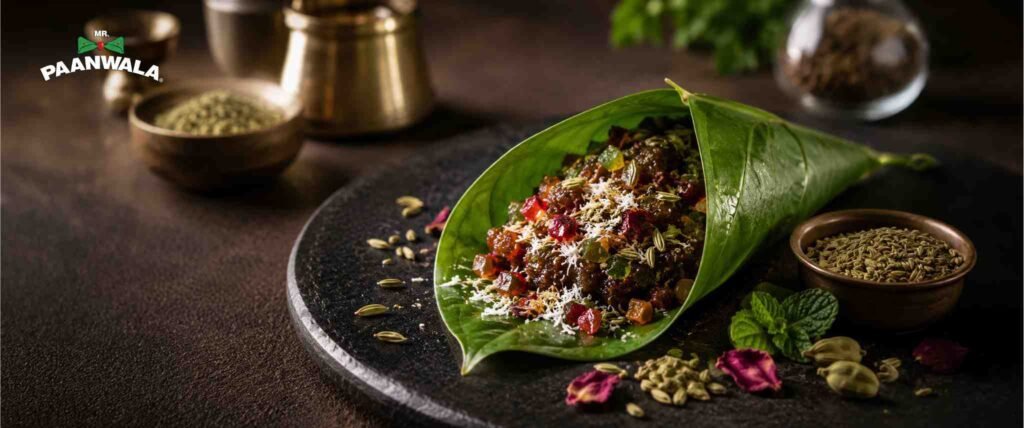
Paan has been a part of Indian tradition, and its taste has kept its fans for many a generation. This is most of all the case in after-dinner and celebration scenarios. With its cool, refreshing flavors and deep cultural roots paan plays a big role in Indian hospitality. Such a role of paan in hospitality has probably given rise to a belief that it might help in digestion. But let’s examine to what extent such a belief is scientifically supported.
To put it simply, there is a strong interplay between the type of paan eaten and its effect. A properly made, no -tobacco paan differs A lot from a preparation where the areca nut or tobacco is included.
The use of betel leaves dates back to a time when they were chewed as a mouth freshener. Some investigations have focused on revealing their abilities to be strong antioxidants and antimicrobials. The ingredients of a paan, like fennel and cardamom, have also been part of Indian tradition in keeping you fresh after a meal.
If we look at the research, we will find that paan itself does not show much effect in the treatment of digestion-related problems or acid reflux, constipation, or indigestion. Because of that, paan for digestion should probably be regarded as a traditional food practice rather than a medically proven healing remedy.
Ingredients as well as the way of preparing the mix play a big role in determining the whole experience of eating such a preparation. Tobacco-free preparations made of fresh betel leaves and other culinary ingredients can be consumed mostly for taste and for being connected to tradition.
The most common mistaken belief is that any kind of paan would have the same ingredients and health effects. Actually, components like betel leaf, areca nut, and tobacco can vary, and their health consequences should not be considered the same.
Areca nut and betel quid without tobacco have been identified by WHO’s Cancer Research Agency as capable of causing cancer in humans. This classification is even for betel quid without tobacco.
That paan is a healthy food, so it should because of this not be the default label on paan. Consumers are expected to check the contents of a dish before getting a piece to eat.
India has several types of paan leaves, with differences in flavor, texture, aroma, and appearance. The leaf selected can have a noticeable effect on the taste and presentation of the final paan.
For a quality-focused preparation, premium paan quality standards should include:
These standards become even more important when paan is prepared for large gatherings and special events.
Consumer interest in digestive health is also reflected in India’s broader digestive products market. According to Statista Market Insights, India’s Digestives & Intestinal Remedies market generated approximately US$794.39 million in revenue in 2025 and is expected to grow at a 4.14% CAGR from 2025 to 2030.
This data does not classify paan as a digestive remedy. Instead, it highlights the broader consumer interest in digestive health and products associated with gastrointestinal comfort.
Today, paan has become more than a traditional after-meal preparation. It is increasingly featured at weddings, corporate events, festivals, and private celebrations.
Professional paan catering services can offer guests a variety of flavors and customized preparations. For upscale occasions, luxury paan catering can turn a familiar tradition into an interactive and memorable food experience.
A modern paan service can also provide choices that allow guests to understand the ingredients they are consuming. This makes the experience more transparent while preserving the cultural character of paan.
At Mr.Paanwala, premium paan quality standards can be reflected through fresh ingredients, thoughtful presentation, hygienic preparation, and consistent quality. The focus is on creating an enjoyable culinary experience rather than making unsupported health claims.
So, is paan for digestion fact or myth? The reality is more nuanced. Betel leaves and several traditional paan ingredients have properties that have attracted scientific interest, but there is not enough clinical evidence to say that paan itself improves digestion or treats digestive problems.
The ingredients matter most. Paan containing areca nut or tobacco should not be promoted as a healthy digestive option because of their established health risks.
For those who enjoy paan, the better approach is to focus on quality, freshness, responsible preparation, and ingredient transparency. With professional paan catering services, this traditional Indian favorite can remain a memorable part of modern celebrations.
Planning an event and looking for a refined paan experience? Contact Mr.Paanwala to explore customized menus and luxury paan catering options for your next celebration.

 Designed by Rang Digitech LLC