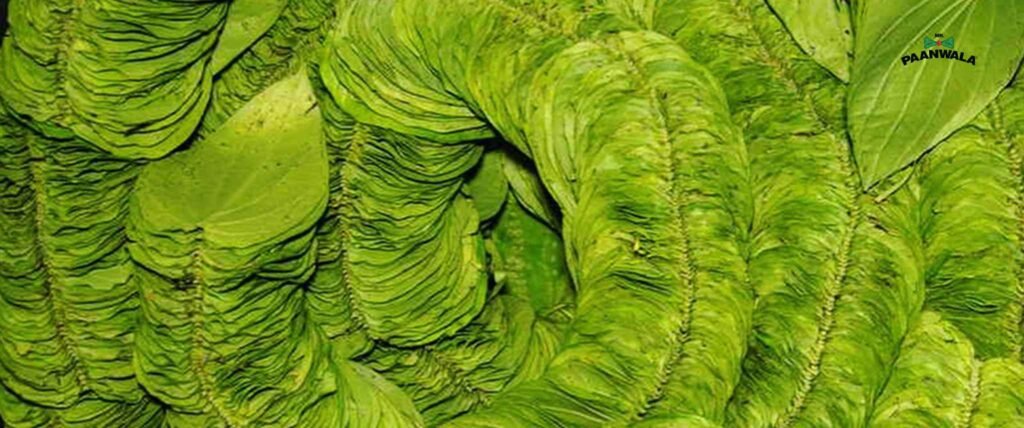
The Betel leaf has a history that spans many centuries, as it has passed through various stages of trade and migration. Called “paan ka patta” in India, it has become an integral part of social occasions, traditional rituals, and common practices among several Asian communities.
According to history and archaeology, the practice of betel-chewing originated in the islands of Southeast Asia and spread to South and Southeast Asia via migration and seaborne trade. The traders and voyagers played an important role in transporting the ingredients of the betel nut between coastal regions, enabling the practice to become a tradition of the locals.
By the first millennium AD, the practice of using the betel had reached certain parts of South Asia. It is mentioned in history as a practice conducted after meals and within the court and social circles.
In India, betel leaf gradually became more than a culinary ingredient. It appeared in religious offerings, wedding customs, and traditional exchanges between families. The significance of paan leaves also varies across regions, with particular varieties and serving practices associated with local customs.
Global paan culture is an illustration of this variety, as communities in India, Bangladesh, Myanmar, Indonesia, and elsewhere in Asia have created their own methods of mixing betel.
Betel leaves still serve as an agricultural commodity in addition to being a cultural icon. It is stated by the Agricultural and Processed Food Products Export Development Authority that India exported about 1,612.98 metric tons of betel leaves and nuts during FY 2025-26. This demonstrates the fact that these commodities are being transported commercially as well.
According to Statista, the total production of spices in FY 2024-25 in India was around 12.5 million metric tons. While this does not reflect the production of betel leaves in India, it indicates the magnitude of India’s agricultural and culinary industry.
Global paan culture around the world still changes with contemporary flavors and presentation, as well as through catering. This is exemplified by the practice of paan catering in Philadelphia, where the South Asian tradition is part of weddings and other special events. Paan catering in Philadelphia can fuse tradition with presentation in an introduction to the custom.
It continues as people seek out ways that allow the use of cultural aspects in their events. Paan catering in Philadelphia is one such way to ensure that the tradition is kept alive, as it can make the serving of paan an integral part of their event.
Betel leaf is a tradition in itself, from trade in olden days to the events today.
Planning a wedding or cultural celebration? Contact us to discuss customized paan catering for your next event.

 Designed by Rang Digitech LLC