
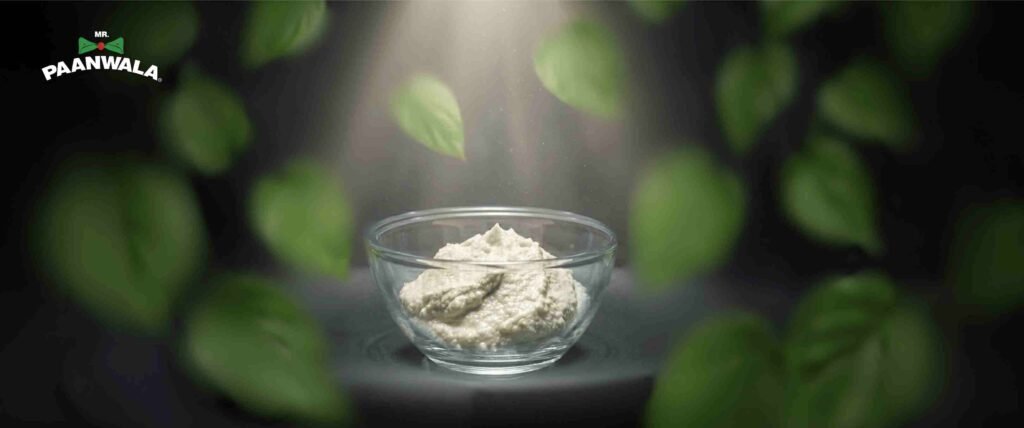
The traditional paan preparation only needs a few small ingredients that can make a big difference. One of the important ingredients is chuna, which is a fine paste made from slaked lime and has been used in paan for centuries. Even though it is used in very small amounts, chuna in paan is very important for the flavor, texture, and overall experience. Knowing why it is used will help you understand why this simple ingredient is still a part of paan culture in India and abroad.
Many people often wonder what is chuna in paan and why it is considered so important. Chuna is a special way of preparing edible lime, which is traditionally applied as a very thin layer over the betel leaf. The main purpose is to counteract the other ingredients in paan and also to help give out the natural flavors of the areca nut, different spices, and sweet fillings.
According to food science, slaked lime causes a very mild alkaline environment, which makes the taste and smell of the ingredients of paan more prominent. If used properly in very small amounts, chuna in paan enhances the overall sensory experience without overshadowing the other flavors.
Besides adding flavor and keeping up with tradition, the benefits of chuna go even further. For generations, paan vendors have depended on this element to enhance the quality and pleasure derived from paan. Among the benefits of chuna is its ability to aid the combination of different components so that every mouthful presents a harmonious taste.
The benefits of chuna on the texture of paan are yet another benefit that should not be overlooked. Besides softening some ingredients, it helps bring out their original flavors, thus providing a more delightful sensation to the palate. The ancient gastronomic methods have always regarded chuna as a fundamental factor that amplifies the potency of other paan ingredients when it is used properly.
While chuna is a good ingredient, using it with great care and control is a must at all times. Expert paan makers just spread a very thin layer of it to keep the flavor and safety at the right level. Such precision in every step of making the paan is what really shows the artistry of baking paan.
Experienced traditional food makers stress the point that the right way of handling and dosing is what helps keep the quality and uniformity. It is by taking such care that paan stays both a delight and a safe product to consume, and at the same time, the time-honored flavor is kept intact.
These days, paan is still a favored element at weddings, festivals, and corporate events. Expert Paan Catering Services typically emphasize that to offer guests a genuine and unforgettable experience, it’s essential to use top-notch ingredients, such as chuna. The inclusion of classic components like chuna is a testament to how tradition and skill continue to be at the heart of today’s paan displays.
Even though the amount of chuna used in traditional paan is very small, it exerts a mighty influence on the flavor, texture, and authenticity of the paan, quite apart from enriching the taste and maintaining the balance of other ingredients. Chuna’s role is a reflection of a long journey through the wisdom of the kitchen and cultural tradition.
Mr Paanwala, with a great sense of pride, keeps the age-old practices alive by meticulously making paan with only the best ingredients and the highest level of skill. By adhering to the strictest measures of quality and genuineness, the brand is able to bring a delightful paan experience that is an ode to tradition, yet is in line with the present-day standards.
Founded in 2009, Mr.Paanwala has redefined the Paan experience with quality, innovation, and tobacco- and nicotine-free creations. The launch of Paan Casa, the world’s first Paan café, features over 100 unique products using ingredients from Bihar, West Bengal, and Kanpur. Committed to healthier alternatives, Mr.Paanwala keeps the tradition of Paan modern, accessible, and enjoyable for all ages.
Facebook | Instagram | X (formerly Twitter) | YouTube | LinkedIn

 Designed by Rang Digitech LLC