
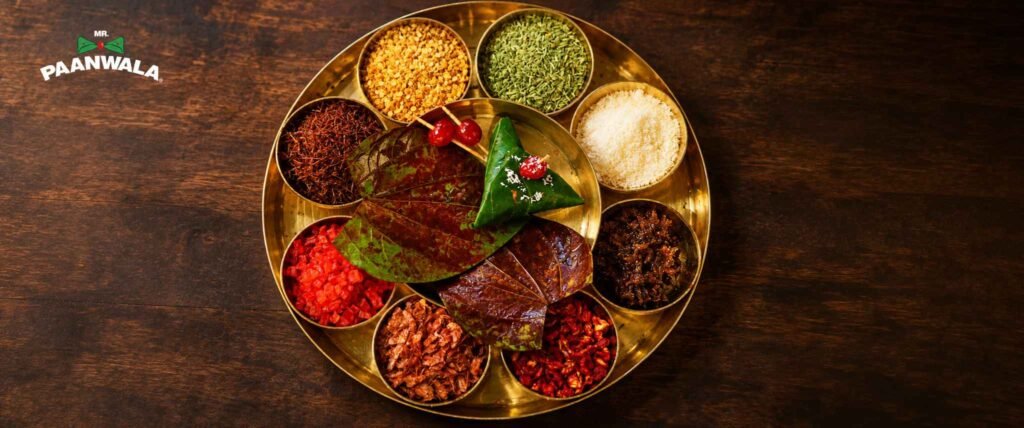
The making of paan requires just a few ingredients whose combined flavor forms the essence of its distinctive taste profile. Although different recipes can be found from one region to another or even among different families, all the ingredients have their own unique contribution to the final taste profile.
Typically, any paan consists of a betel leaf that acts as a wrapper for the rest of the contents inside. In addition to its aroma that is slightly peppery in taste, the type of leaf used determines the size, texture, and flavor of the leaf.
Since the leaf forms an integral part of the making of paan, the type of leaf and how it is handled becomes crucial in determining how the paan will turn out especially during wedding celebrations.
Meetha paan contains gul-kand which is a sweet delicacy made using rose petals and sugar. Gul-kand is responsible for the fruity taste and soft consistency that meetha paan has. Saunf refers to fennel seeds, giving meetha paan a slight taste of aniseed and some crunchy sensation.
Other constituents can be added, such as cardamom, coconut, and flavored seeds. The amounts vary, enabling the manufacturers to come up with many types of paan.
The term “supari” means areca nut, which is one of the ingredients used in the making of paan. On the other hand, “katha” is the name for catechu, which is plant-based and provides an astringent taste to the mixture.
These two ingredients may not be necessary in all paans. What must be emphasized here is that areca nut is cancerous and cannot be termed a safe ingredient for health, even without the use of tobacco.
The phrase what is paan in India refers to more than one fixed recipe. Paan has regional variations, and its ingredients can change depending on local customs, personal preferences, and the occasion.
The Meetha paan uses sweet flavors like gulkand and fennel, whereas the saada paan uses a simple or traditional recipe. There can be other recipes where chocolate or other dessert-flavored paans are prepared. It is interesting to note how the same tradition changes itself according to taste.
It is noteworthy that there are no separate statistics on the consumption of paan in terms of the confectionery market; however, its sweet varieties belong to the culture of dessert consumption. As per the data provided by Statista, the United States confectionery market was forecasted to bring $88.01 billion in revenue in 2025 and to grow annually by 5.3% from 2025 to 2030. The data presented refers to the confectionery market in general.
The market statistics make it evident why various types of paan with sweet flavors may attract individuals who seek something unusual for celebration.
In cases of weddings, private events, or corporate parties, it is possible to have a carefully planned paan bar with options of both traditional and modern paan recipes. If you plan on planning paan catering in New Jersey, you should find out from the caterer about the ingredients used, customization, food safety, and whether areca nut or tobacco is available on their menu.
At Mr.Paanwala, you can experience paans at your events, and you will have the chance to discuss your menu preferences beforehand.
If you plan an upcoming wedding or other event, contact us to inquire about our paan catering services in New Jersey.

 Designed by Rang Digitech LLC